What "Build-Ready" Actually Means: How a Wooded Lot Becomes a Homesite
Home › Blog › What "Build-Ready" Actually Means: How a Wooded Lot Becomes a Homesite
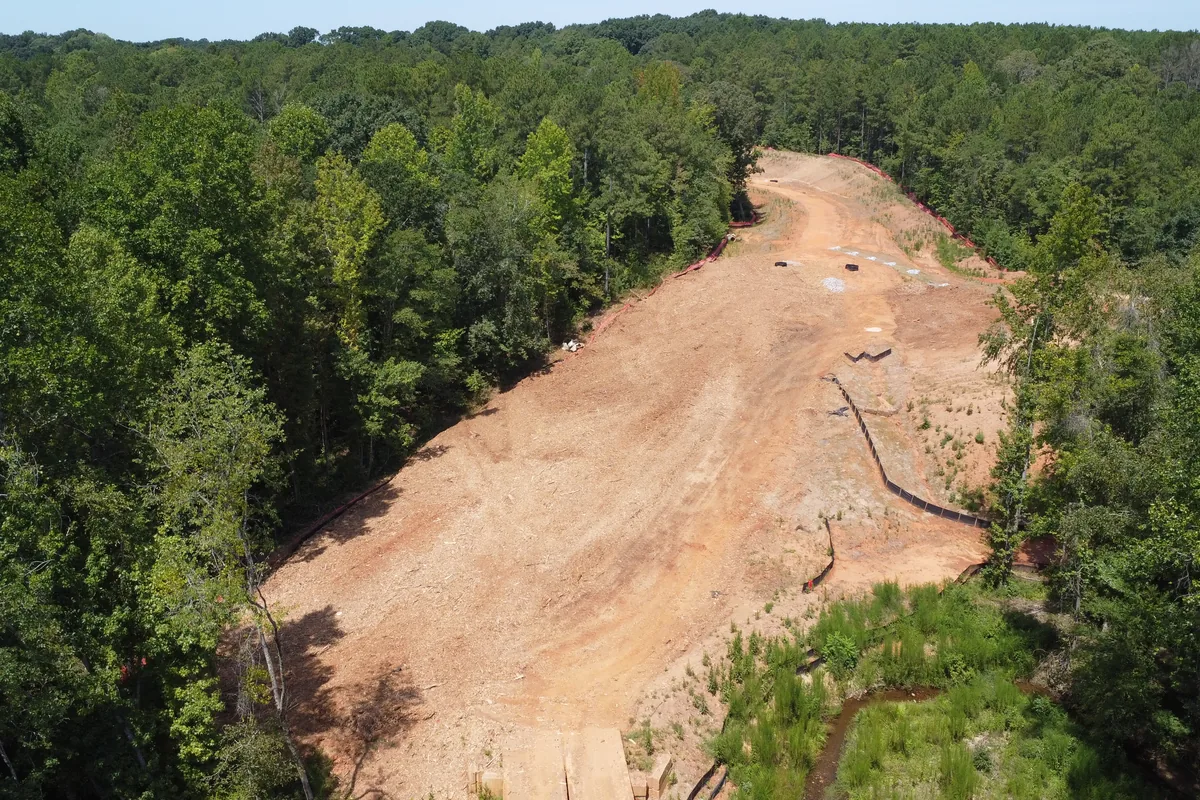
"Build-ready" gets thrown around a lot. Here's what has to happen to a wooded lot before a builder can actually start, in the order it happens.
Start from the end: what the builder needs
A builder needs a lot where the footprint is clear of trees and stumps, the ground is shaped to a rough grade with a pad where the house goes, and there's access for trucks and equipment. Anything short of that and their crew is standing around waiting, or worse, working around problems that should have been solved before they got there.
So when we say build-ready, we mean that specific condition: the site is done with the earthwork phase and the next contractor can start. Everything in this article is about getting a wooded lot to that point.
Step one: clearing the footprint
The first job is deciding what comes out. On most homesites that's the house footprint, the driveway path, and enough room around the house for construction. A lot of owners keep the trees around the edges, and that's usually a good call: it keeps the lot looking like it belongs where it is and saves work.
Then the trees come down. On a heavily wooded lot this is excavator and dozer work, and it's more involved than it looks from the road. A one-acre wooded lot has a lot of moving parts once you're in it. Where things go, how the debris gets handled, and what the ground looks like underneath all get worked out here.
Step two: dealing with stumps and debris
This is the step that separates a lot that looks cleared from one that's actually ready. Stumps and root balls have to come out of the footprint, and the tops, limbs, and brush have to go somewhere.
On our jobs, that somewhere is usually a horizontal grinder. The excavator feeds the stumps and debris into it, and it comes out as mulch. That avoids a burn pile, which depends on weather and permits and leaves a scar, and it avoids hauling, which means truck after truck through a neighborhood and a tipping fee on every load. The mulch can be spread on site, used for erosion control, or hauled off in a fraction of the loads if it does need to leave.
Step three: grading and the pad
With the footprint clear and the stumps out, the ground gets shaped. Rough grading cuts the high spots, fills the low ones, and sets up how water will move across the lot. The building pad gets shaped where the house goes. If material has to come in, or rock is in the way, or a grade change needs a retaining wall, this is where it happens.
Around Winder and the rest of Northeast Georgia, that ground is red clay under topsoil, on rolling terrain. Clay holds water when it's wet and turns hard when it's dry, so timing and drainage matter more than people expect. Good grading accounts for that. When the dozer leaves, the lot should look like a place you could pour a foundation, because that's what happens next.
Why one contractor for all three
Every handoff between contractors is a place for things to go wrong. The clearing company finishes and leaves piles the grinding company has to work around. The grinding company leaves and the grading company finds stumps that were missed. Each one has its own schedule, its own price, and its own idea of what "done" means.
When the same crew does the clearing, the grinding, and the grading, none of that happens. The people running the dozer know where every stump was. The scope is one document with one price, and "done" means the lot is ready for the builder. That's the whole reason S5 Earthworks is set up as a turnkey operation, and it's the thing builders and property owners tell us they value most.
What to have ready when you call
You don't need a survey and a set of plans to get started, but the more you know about where the house is going and how you want the lot to look, the better the site walk goes. Bring the plat if you have it. Know roughly which trees you'd like to keep. Think about where the driveway comes in.
Then we walk it together, put the whole scope in writing, and get to work. Read more about our turnkey homesite service and grading and site prep, or call and we'll come look at the lot.
Have a piece of property that needs work?
Call (678) 846-3195 or send the estimate form. We'll set up a time to walk it with you and give you a straight price.
Get a Free Estimate